Digital transformation is one of the most talked‑about topics in modern business — and for good reason. But despite the buzz, many organisations still ask the same fundamental questions: What does digital transformation actually mean? Is it just new software? Where do we even start?
In this article, we answer the most common questions businesses ask about digital transformation, cutting through the jargon and focusing on what truly matters.
What Is Digital Transformation, Really?
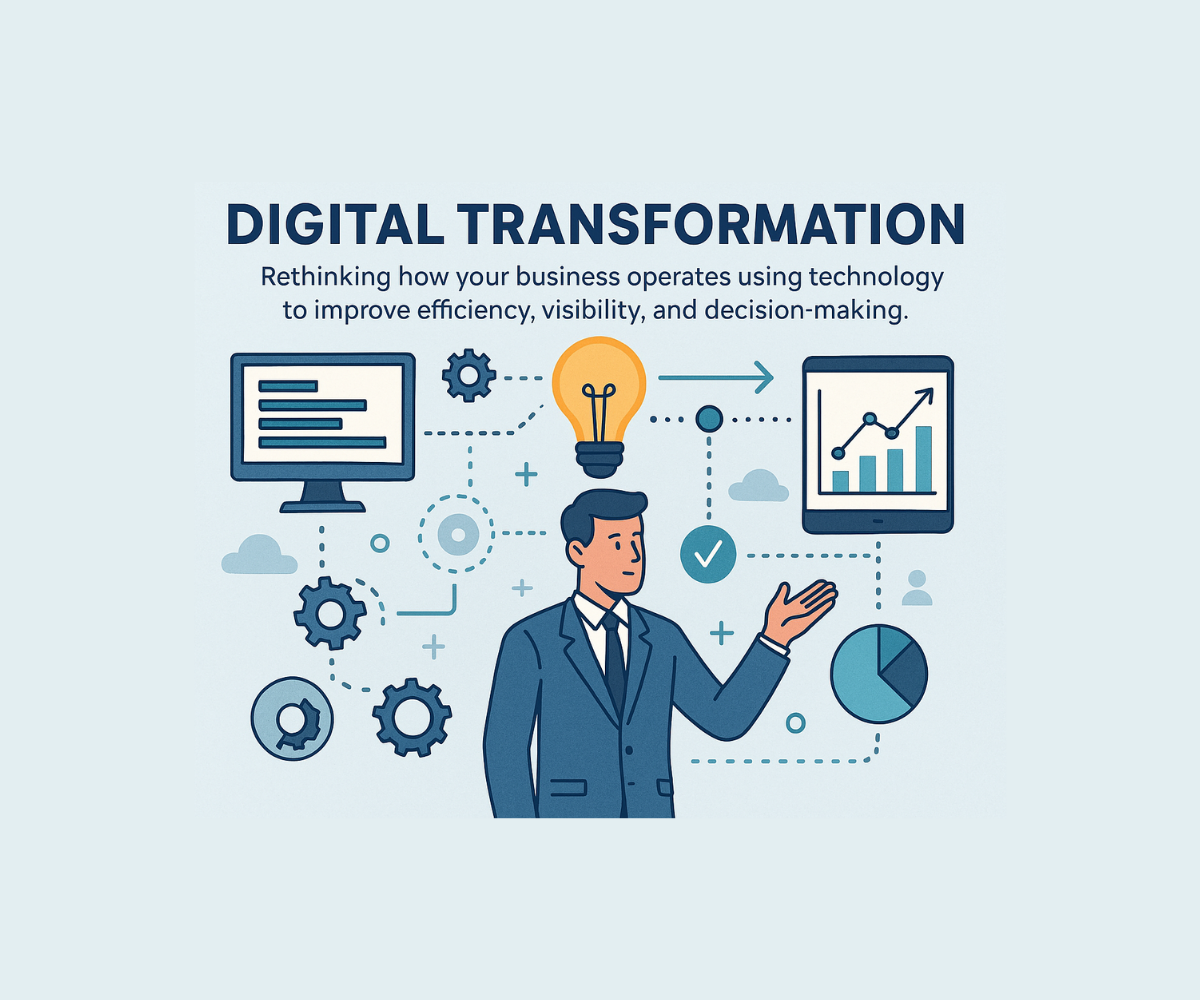
Digital transformation is not about buying the latest piece of software or moving a spreadsheet into the cloud. At its core, digital transformation is about rethinking how your business operates, using technology to improve efficiency, visibility, and decision‑making.
It means:
- Replacing disconnected systems with one source of truth
- Automating manual, repetitive tasks
- Making business data accessible and useful
- Supporting teams with tools that fit how they actually work
Successful digital transformation aligns people, processes, and technology — not just IT.
Why Do So Many Digital Transformation Projects Fail?
This is one of the most common (and valid) questions businesses ask.
Digital transformation often fails because:
- Technology is implemented without understanding real business processes
- Systems are too rigid and don’t adapt as the business grows
- Staff aren’t involved or trained properly
- Businesses try to digitise chaos instead of fixing it
Transformation should simplify work — not create more complexity. The most successful projects start with clear problems, not shiny tools.
What Problems Can Digital Transformation Solve?
When done correctly, digital transformation can deliver tangible improvements across the organisation.
Common problems it solves include:
- Teams wasting time searching for information
- Data living in multiple spreadsheets and systems
- Manual processes slowing down growth
- Lack of visibility across departments
- Difficulty reporting or tracking performance
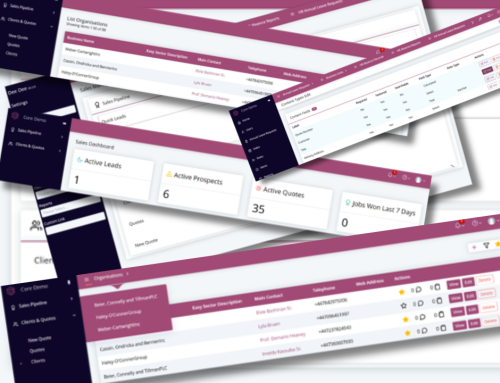
By centralising data and workflows into a single, flexible system, businesses can reduce friction, improve accuracy, and free teams to focus on higher‑value work.
Does Digital Transformation Mean Replacing Everything?
No — and this is a critical point.
Digital transformation doesn’t mean ripping everything out and starting again. In fact, the best approaches integrate with the tools you already use, evolving your systems gradually rather than forcing disruptive change.
A flexible platform allows you to:
- Start small and scale over time
- Build processes around your business, not the other way around
- Adapt as your needs change
Transformation should be evolutionary, not overwhelming.
How Do You Start a Digital Transformation Journey?
The best starting point is asking the right questions:
- Where are we losing time?
- What processes rely heavily on spreadsheets or manual steps?
- Where do teams feel frustrated or blocked?
- What data do we struggle to access or trust?
From there, the focus should be on solving real business problems, not deploying technology for its own sake. A clear roadmap, strong internal buy‑in, and the right partner make all the difference.
Let’s get more technical
OK, for those of you that are a bit more technical, read on, the following paragraphs delve a bit deeper and explain things from a slightly different perspective, so if some things are repeated from above, please excuse that!
Digital Transformation: A Practical, Business‑Led Perspective
Digital transformation is often discussed in broad, abstract terms, yet its success depends on very practical decisions. At its core, digital transformation is the strategic alignment of people, processes, and technology to improve operational efficiency, data integrity, and organisational agility.
The following paragraphs address the most common questions, in our experience, that businesses ask when considering digital transformation — with a focus on clarity, structure, and long‑term value.
What Is Digital Transformation?
Digital transformation is not the implementation of a single system or tool. It is the process of redesigning operational workflows and information management using technology as an enabler.
Effective digital transformation delivers:
- Centralised, structured data
- Reduced reliance on spreadsheets and manual workarounds
- Improved reporting and visibility
- Scalable systems that support growth
Technology alone does not create transformation — process design does.
Why Do Digital Transformation Initiatives Fail?
Failure typically occurs when transformation is approached as a purely technical exercise.
Common causes include:
- Implementing rigid systems that don’t reflect real‑world workflows
- Automating inefficient or undocumented processes
- Poor stakeholder engagement and adoption
- Over‑engineering solutions too early
A successful transformation strategy prioritises business requirements first, then selects technology capable of evolving alongside them.
What Business Challenges Can Digital Transformation Address?
Digital transformation is particularly effective in organisations experiencing:
- Fragmented data across multiple systems
- Limited reporting capability
- Manual or duplicated processes
- Poor cross‑departmental visibility
- Inconsistent data governance
By consolidating data and workflows into a single adaptable platform, businesses gain improved control, transparency, and decision‑making capability.
Does Digital Transformation Require Full System Replacement?
No. In fact, wholesale replacement often introduces unnecessary risk.
Modern transformation strategies focus on:
- Incremental improvement
- Integration with existing tools
- Modular system design
- Long‑term scalability
This approach reduces disruption while delivering measurable benefits at each stage.
Establishing a Transformation Roadmap
A strong starting point is operational analysis:
- Identify high‑friction processes
- Assess data quality and accessibility
- Understand user pain points
- Define measurable outcomes
From there, transformation should progress in phases — delivering value early while maintaining flexibility for future requirements.
Why Work with Core Software?
Core Software provides a flexible, cloud‑based platform that supports business‑led digital transformation. Designed to adapt to existing workflows, the system enables organisations to centralise data, streamline processes, and reduce operational complexity without imposing rigid structures. Our usual working pattern involves identifying one business process that is currently inefficient and fixing that with a system. On the back of that, we can build reporting using Microsoft PowerBI. Once that element is complete, we can move on to the next process that is causing issues. This fosters employee buy-in, as they realise some value, quite early in the life cycle of the transformation. The aim is to save you time (or money) within each process that we identify as a problem, then to compound that, by saving more time (or money) on another process, and so on.
Based in Sheffield, Core Software combines technical capability with a practical understanding of real‑world business operations.
Contact Core Software
For organisations exploring digital transformation, Core Software offers free, no‑obligation consultations to assess requirements and identify opportunities.
Core Software Solutions Ltd
Unit 9, Edmund Road Business Centre
Sheffield, South Yorkshire, S2 4ED
📧 sales@core-software.co.uk
📞 0331 630 3326
👉 Book a consultation:
https://outlook.office.com/book/CoreSoftwareBooking@espprojects.co.uk/?ismsaljsauthenabled